How We Work

Our Custom Software Development Process

We build custom software in short, practical cycles so clients can see progress, review working software, give feedback, and help shape the application as it grows.

Why Iterative Co-Development

Custom software works best when clients can see it, use it, and shape it as it grows.

A written specification can only take a software project so far. The best feedback usually comes when real users have real software in front of them.

That is why Tornado uses an Iterative Co-Development Process. We build in short cycles, release working pieces for review, gather feedback from key stakeholders, and adjust the next steps based on what the software actually needs to accomplish.

  • Get feedback earlier
  • Spot misunderstandings before they become expensive
  • Adjust priorities as the project evolves
  • Build what is actually useful, not just what sounded good in the beginning
  • Keep the client involved without requiring them to manage every detail

There is no better feedback than having an actual application in front of the people who will use it.

The Process

The Tornado CRAFT Development Process

Our process is iterative and collaborative. The best results come from combining experienced developers, the latest development tools, and continuous client collaboration throughout the project.

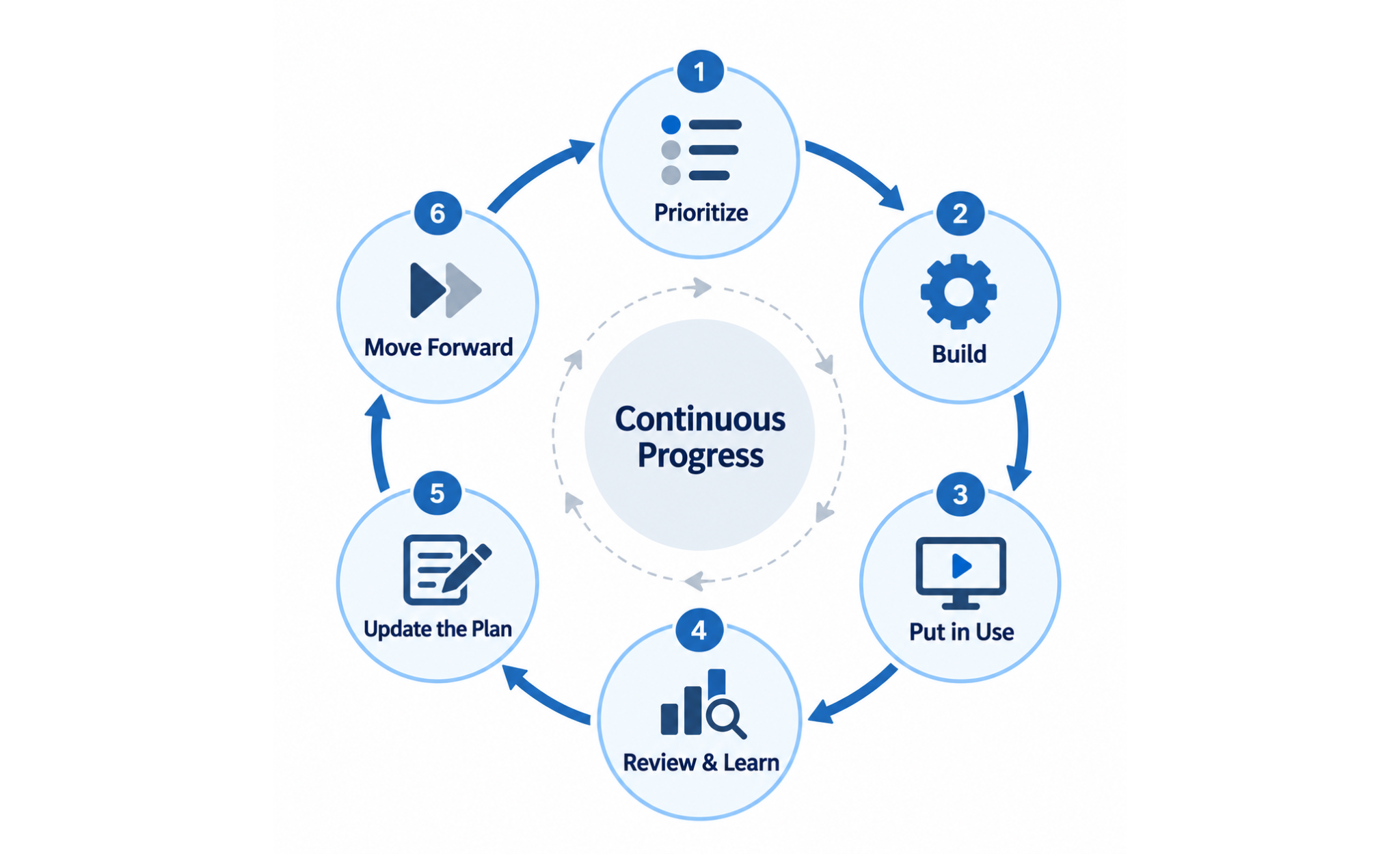
Each cycle follows the same basic rhythm: Prioritize, Build, Put in Use, Review & Learn, Update the Plan, and Move Forward. Then the cycle repeats.
Continuous progress cycle showing Prioritize, Build, Put in Use, Review and Learn, Update the Plan, and Move Forward
1

Prioritize

We decide what matters most for the next development cycle. That means focusing on the features, workflows, risks, or questions that will create the most value or give us the most useful information early.

  • Focus on the highest-value work first
  • Address important risks and unknowns early
  • Keep effort aligned with current business priorities
2

Build

Our developers turn those priorities into working software using experienced judgment, modern development tools, and AI-assisted capabilities where they genuinely improve the work.

  • Build in focused, practical increments
  • Keep quality and maintainability in view
  • Use modern tools to improve speed without sacrificing judgment
3

Put in Use

We put the new work in front of the people who need to evaluate it. Depending on the project, that may mean a test environment, a pilot group, a working demonstration, or a production release.

  • Make progress visible
  • Let real users interact with the software
  • Test assumptions against actual workflows
4

Review & Learn

We review the software with key stakeholders and learn from what actually happened. This is where users confirm what works, identify what feels wrong, and surface details that are hard to discover from specifications alone.

  • Gather practical feedback
  • Identify misunderstandings while they are still manageable
  • Learn what users and the business really need next
5

Update the Plan

We use what we learned to adjust the plan. Priorities may change, a workflow may need refinement, or a new opportunity may become more important than something originally planned.

  • Refine requirements based on real feedback
  • Reorder priorities when the business need changes
  • Protect the budget by changing direction early when needed
6

Move Forward

With better information and updated priorities, we begin the next cycle. Each pass should leave the software more useful and the project team more confident about where the project is going.

  • Carry forward what we learned
  • Choose the next most valuable work
  • Continue making visible, practical progress
Communication

You should never wonder what is happening with your project.

At a minimum, we provide project status updates at least once per week. For projects that need closer coordination, we can provide updates more frequently, including daily updates when required or desired.

Status Updates

We keep you informed about progress, upcoming priorities, risks, blockers, and decisions needed from your team.

Review Meetings

We meet with key stakeholders to review what has been built, gather feedback, and decide what should happen next.

Flexible Involvement

Some clients want hands-on review. Others prefer high-level updates. We adjust the communication rhythm to fit the project.

Development Discipline

We treat your software like a long-term business asset.

Good development discipline helps keep software maintainable after the initial build is complete. That matters because business software usually needs to grow, change, and be supported over time.

Source Control and Code Management

Our code changes are checked into source control daily. This helps protect the project, preserve history, support collaboration, and reduce risk.

  • Track code changes
  • Protect against lost work
  • Support multiple developers when needed
  • Review prior changes
  • Support future maintenance and enhancements
AI in Development

We use AI as a productivity tool, not as a replacement for experienced developers.

AI can help software teams work faster, but it does not replace business understanding, technical judgment, testing, or accountability.

How We Use AI

We use AI where it makes sense to improve productivity, research options, generate ideas, assist with code, review patterns, troubleshoot issues, and speed up certain development tasks.

  • Improve speed and productivity
  • Assist with code and troubleshooting
  • Help research and evaluate options
  • Support testing and review where appropriate

How We Keep Humans Accountable

We do not simply hand a project to AI and hope for the best. Experienced developers remain responsible for the final result.

  • Humans make architecture and business-logic decisions
  • AI-assisted work is reviewed and validated
  • We do not use “vibe coding” unless that approach truly fits the project
  • Quality, maintainability, and business fit remain developer responsibilities
After Main Development

The process adapts as the software matures.

Once the main development phase is complete, many projects naturally shift into a support, maintenance, or enhancement rhythm.

Ongoing Improvements

In some cases, we continue using the same iterative process but slow down the frequency of releases, review meetings, and updates.

As-Needed Support

In other cases, we help when changes, fixes, or improvements are needed. The support model should match the reality of the software and the business.

Before Development Begins

Where PowerScoping Fits

Some projects start before development begins. For clients who need a budgetary estimate before deciding whether to move forward, the project may begin with PowerScoping.

PowerScoping helps identify the major building blocks, assumptions, options, and budget ranges before committing to detailed specifications or development. Once the client decides to move forward, the work can transition into our Iterative Co-Development Process.

  1. PowerScoping helps determine what it may take and whether the project makes business sense.
  2. Iterative Co-Development helps build the software in practical cycles with regular feedback.
  3. Ongoing support or enhancements help the software continue to serve the business after launch.
95%+returned for more

Repeat work is one of the clearest signs of real value.

Anyone can say they deliver value. The better test is whether clients come back after they have worked with you. More than 95% of clients who have worked with Tornado have returned for additional projects. Clients may like a vendor personally, but they do not keep investing unless the work produces value.

What Makes Us Different

We focus on what the software needs to accomplish, not just what the spec says.

Some development firms simply build what they are told. That can work when every detail is already known, but many custom software projects are more complicated than that.

We Learn the Business

We try to understand the business behind the software. We ask questions, look for the real workflow, and pay attention to the output the client actually needs.

We Build for Real Use

We help identify when something should be changed, simplified, added, delayed, or approached differently. The best software is not just technically correct. It fits the business.

FAQ

Common
Questions

Because important things are learned once people begin seeing and using real software.

A traditional approach tries to define nearly everything at the beginning and then build toward that specification. That can work in highly predictable situations, but business software often involves workflows, user behavior, priorities, and details that become clearer during development.

Our iterative process lets us build in shorter cycles, review actual progress, learn from it, and adjust while those changes are still practical.

Typically, you will see progress throughout development rather than waiting until the project is nearly finished.

Our development process uses relatively short cycles, often one to three weeks depending on the project. At appropriate points, stakeholders review what has been built, provide feedback, and help determine what should happen next.

That visibility makes it easier to catch misunderstandings early and keep the project aligned with the business.

Changes are expected.

Sometimes a requirement changes because the business changes. Other times, users see working software and realize that a different workflow would be better. New information may also cause one feature to become more important and another less valuable.

Instead of pretending those changes will not happen, our process provides regular opportunities to reconsider priorities and make informed tradeoffs.

Priorities are established collaboratively with the client.

Tornado brings technical experience, identifies dependencies and risks, and recommends sensible sequencing. Your team brings the business knowledge needed to determine what creates the most value.

Together, we decide what should receive attention next rather than blindly following a list created months earlier.

Iteration does not mean unlimited scope or unlimited spending.

We keep projects grounded through priorities, estimates, regular reviews, visibility into progress, and ongoing decisions about where the next development dollars should be spent.

The flexibility is there so the project can respond intelligently to what we learn, not so that every new idea automatically gets added.

Testing happens throughout development rather than being treated as one final step.

The exact approach depends on the application and its risks. It can include developer testing, automated testing, integration testing, targeted manual testing, user review, and validation of important business scenarios.

No testing process can guarantee that software will never contain a defect. The objective is to identify problems early, protect the areas that matter most, and reduce the risk of surprises when the software reaches real users.

We raise the issue and deal with it rather than quietly continuing.

Software estimates are based on what is known at the time, and uncertainty varies significantly from project to project. New requirements, unexpected technical problems, difficult integrations, or discoveries in existing software can affect the effort required.

Regular communication and short development cycles give us opportunities to identify those changes, explain the impact, and discuss options such as changing priorities, reducing scope, changing the approach, or increasing the investment.

No. Most useful business software continues to evolve after its initial release.

Users identify improvements, business processes change, integrations need attention, operating systems and third-party services evolve, and new priorities emerge.

Tornado can continue maintaining and improving the application after launch, whether that means occasional support or an ongoing stream of enhancements.

Ready to build the right way?

Whether you are starting from a new idea, a PowerScoping result, an existing system, or a known workflow problem, Tornado can help you move forward with a practical development process.

Schedule a Call