Web Applications
Browser-based systems for employees, customers, vendors, or partners.
- Internal business systems
- Customer and vendor portals
- Workflow applications
- Multi-location access
When off-the-shelf software creates too many compromises, custom software can remove bottlenecks, connect important workflows, and give your business capabilities that fit the way you actually operate.
Custom development is not automatically the best answer. The goal is to solve the business problem with the least complexity, cost, and long-term risk.
Off-the-shelf products force critical workflows into workarounds, spreadsheets, or side systems.
Employees spend time copying information, reconciling versions, or doing repetitive administrative work.
A portal, mobile experience, or self-service workflow could remove friction for customers or partners.
Commercial software handles the basics but cannot support the part of the process that makes your business different.
Processes that worked with ten people or one location are breaking as volume, users, or complexity increases.
The right application could help you deliver faster, reduce errors, improve service, or create a new product or revenue stream.
The application type comes after the business problem. We choose the platform and architecture based on users, workflows, integrations, and long-term goals.
Browser-based systems for employees, customers, vendors, or partners.
Purpose-built mobile experiences when work happens away from a desk.
Replace fragile spreadsheets and disconnected tools with one dependable workflow.
Turn a product idea or new-business vision into software that customers can use—and that you can build a business around.
Bring together systems, information, and workflows that currently live apart.
Turn operational data into information people can actually use.
A candid comparison is more useful than pretending custom development is always the answer.
Best when the problem is common.
A proven product already handles most of your requirements, the workflow is fairly standard, and adapting your process is acceptable.
Best when the process matters strategically.
Your workflow is unusual, manual work is expensive, integrations are critical, or software can create a meaningful operational or customer advantage.
Best when the foundation still works.
An existing system already contains valuable business knowledge and targeted enhancements may solve the problem without a full replacement.
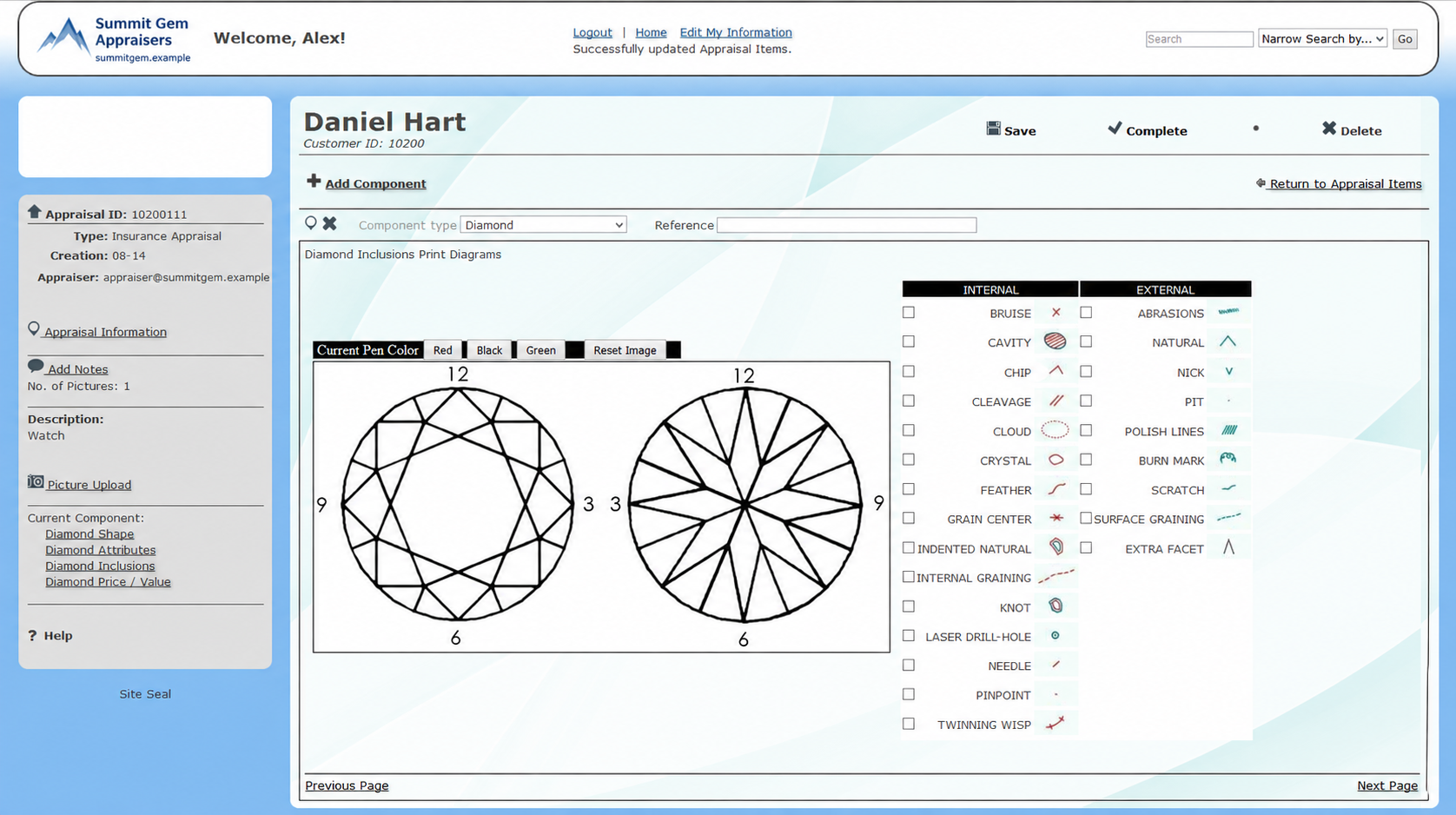
Custom software can bring specialized products, customer information, and business processes together in one application when off-the-shelf software does not fit the way the business works.
“I would recommend Tornado Technologies! I met with Mark and his team in person to talk about my vision and needs. They took a genuine interest and listened and asked many questions. There were initially a few revisions to make the process simpler. Software updates are done periodically, and they don’t seem to take their eye off of my account. The application that was created fits the bill and provided the visual/accountability and reports helping my company to be more efficient and increasing revenue. I have worked with other software companies that took an interest initially an provided a cookie cutter solution and then seemed to disappear…That is not what Mark and his team do. Anytime there is a question, they reply promptly.”
These are examples of business problems we have solved—not a limit on what we can build.
Replace spreadsheets and disconnected records with clearer inventory visibility.
Give customers secure access to information, requests, documents, or transactions.
Standardize complex pricing rules and shorten the path from request to quote.
Capture information where the work happens and sync it back to core systems.
Turn an entrepreneur’s or company’s product vision into software they can bring to market and sell to customers.
Coordinate work, priorities, capacity, and status in a way spreadsheets cannot.
Most custom software projects fall into one of three ranges:
Foundation Apps: $5,000–$25,000
Impact Apps: $25,000–$75,000
Advanced Apps: $75,000–$150,000+
The right investment depends on the complexity of the application, the number of users, integrations, workflows, and business goals. Just as no two houses cost the same, no two software projects are identical.
We also tell prospective clients that custom software is not always the best choice. If an off-the-shelf solution already meets most of your needs, it may be the smarter investment.
Our goal is to help you determine which approach makes the most sense for your business.
In many cases, buying existing software is the right choice. If a product already meets most of your needs at a reasonable cost, we typically recommend starting there.
Custom software tends to make sense when your business relies on unique processes, employees are spending significant time on manual workarounds, or you need capabilities that existing software cannot provide. It can also be a good investment when software plays a direct role in creating a competitive advantage for your company.
A simple rule of thumb is this: If your problem is common, buy software. If your process is unique, custom software may be worth considering.
Our job is to help you evaluate both options and determine which approach provides the best long-term value for your business.
Most custom software projects fall into one of three timelines:
Foundation Apps: 2–8 weeks
Impact Apps: 2–6 months
Advanced Apps: 4–9 months or more
One thing many people don’t realize is that you often don’t have to wait until the entire application is finished to start receiving value. In many projects, portions of the system can be released and used while development continues, allowing your team to begin benefiting from the software much earlier.
The actual timeline depends on the complexity of the application, the number of users, integrations, workflows, and overall project scope.
The projects that move fastest typically have clear goals, consistent feedback from users, and a focused scope.
It’s a fair question, and the honest answer is: sometimes yes, sometimes no.
Modern AI tools can create surprisingly capable applications, especially for prototypes, internal tools, simple workflows, and proof-of-concept projects. Many businesses are using AI to explore ideas and build initial versions of applications faster than ever before.
However, building software and building software that a business can depend on every day are not the same thing. As software becomes more critical to your operations, factors like security, integrations, testing, scalability, and long-term maintenance become increasingly important. That’s where AI alone tends to fall short.
We use AI ourselves throughout our development process to work more efficiently and deliver better results for our clients. It helps us move faster, catch issues earlier, and spend more of our time on the things that actually require human expertise and business judgment.
But we view AI as a powerful tool in the hands of experienced engineers, not a replacement for sound software design and engineering. In most cases, the best outcomes come from combining the speed of AI with the planning, testing, and real-world business understanding needed to build something your team can rely on for
years to come.
Most software projects don’t fail because of technology. They fail because of unclear objectives, lack of user involvement, poor communication, or trying to tackle too much at once.
We’ve seen this enough times that it directly shaped how we work.
Rather than disappearing for weeks and resurfacing with something that missed the mark, we build frequent reviews and status updates into every project. You’ll always know where things stand, what’s coming next, and whether the project is tracking toward your original goals. If something isn’t heading in the right direction, we’d rather catch it in week two than week ten.
The most successful projects also start with a clear business goal and focus on solving the highest-value problems first. They involve the people who will actually use the system, and they treat early feedback as an asset rather than an interruption. A phased approach, tackling the most important capabilities first, consistently produces better results than trying to build every possible feature from day one.
One other mistake worth mentioning: trying to automate a process before it’s well understood. Software is very good at improving a good process, but it can just as easily amplify inefficiencies if the underlying process isn’t working well. Part of our job is helping you think through that before a single line of code gets written.
Changes are a normal and expected part of most software projects, and we’d rather you tell us about them than try to work around them in silence.
We know “requirements change” can sound like a warning that costs are about to spiral. So here’s specifically how we handle it.
We use an approach we call Iterative Co-Development. Rather than disappearing for months and returning with a finished application, we deliver working versions of the software throughout the project so your team can see it, use it, and provide feedback as early and as often as possible. In our experience, the best feedback comes when stakeholders can actually interact with the software rather than trying to imagine how it will work from a written description.
Those frequent touchpoints do something else that’s just as important: they give us a shared, real-world reference point for evaluating changes. When a new request comes up, we can look at what was originally discussed, what’s been built, and what we’re hearing now. That makes it much easier to have an honest conversation about whether a change is a natural refinement of the original idea or something that genuinely expands the scope. Most of the time, that distinction is pretty clear when both sides have been involved every step of the way.
When a change does affect the timeline or budget, we’ll tell you before we act on it, not after.
The short answer is: as much or as little as you’d like, but most clients find that 1–3 hours per week is enough to stay meaningfully involved without it becoming a burden.
Some clients prefer to be highly engaged, reviewing designs, providing frequent feedback, and helping shape the solution as it evolves. Others prefer to set the overall direction, make key decisions, and have us handle most of the day-to-day work. Most fall somewhere in the middle.
Regardless of your preference, we schedule regular review sessions every week or two to demonstrate progress, gather feedback, and make sure the project stays aligned with your goals. These don’t need to be long, often 30 to 60 minutes is enough to cover what’s been built, what’s coming next, and any decisions that need your input.
What we don’t expect is for your team to manage developers, write technical specifications, or oversee the project on a daily basis. Our goal is to make the process as straightforward as possible while still giving you full visibility into where things stand.
The best results we’ve seen come from a simple division of expertise: you know your business, your people, and your processes. We know software. When those two perspectives work together consistently, the end result is almost always better than when either side works in isolation.
Unless otherwise agreed, you own the custom software developed specifically for your project.
We believe your software should be an asset of your business, not something that limits your future options. Before a project begins, we’ll clearly define ownership, licensing, and any third-party components so there are no surprises later.
Source code ownership is one of the most important questions to ask before starting any custom software project. Different firms have different policies, and those policies can affect your flexibility, support options, and long-term control of the software.
It happens, and we think you should know upfront that you’re never locked into completing the full project.
Business priorities shift. Budgets change. Sometimes a project starts one size and the financial picture looks different six months in. We understand that, and our approach is designed to protect you if that situation ever arises.
Because we work in iterations, delivering and getting paid for working software in stages rather than one large lump sum at the end, you’re never far from a natural stopping point. If you need to stop after four iterations of a ten-iteration project, you pay for the work completed through that fourth iteration and you walk away with the source code for everything built to that point. You own it, it works, and you can pick the project back up later with us or with another developer if you choose.
Formally, our contracts include a 30-day cancellation notice period, but we stop work as soon as you notify us. We simply ask that any work completed up to that point is paid in full, and then we hand over everything that’s been built.
We’ve never had a client stop a new application project midway through, but we have had long-term clients pause or end enhancement work due to budget changes, and those situations were handled cleanly and without conflict. We think that’s worth mentioning, because it’s easy for any vendor to describe a graceful exit policy. We’ve actually had to live it.
In most cases, yes. Integration is often one of the highest-value things we can do for a business.
If your team is manually re-entering data between systems, copying information from one platform to another, or reconciling records that should already match, that’s a problem integration can typically solve. We regularly connect custom applications with systems like QuickBooks, Sage, ACH Transfers, and a wide range of ERP, CRM, and manufacturing platforms. We also work with databases, third-party APIs, and in many cases, equipment on the shop floor.
The efficiency gains can be significant. Eliminating duplicate data entry reduces errors, saves time, and lets your people focus on work that actually requires their attention rather than moving information from one place to another.
If integration is an important part of your project, we evaluate the available options early in the planning process and recommend the best approach before any development begins. Some systems integrate easily and cleanly. Others require more creative solutions. We’ll give you an honest assessment of what’s involved either way.
And if you’re not sure whether your existing systems can be connected, that’s a great question to bring to an initial conversation. More often than not, there’s a path forward.
The better question is: what problem are you trying to solve?
Our clients come to us with challenges like tracking inventory across multiple locations, managing production schedules, automating quoting and estimating, streamlining customer onboarding, replacing spreadsheet-based processes, or connecting systems that don’t talk to each other. The application type tends to follow from the problem, not the other way around.
That said, we develop web, mobile, and desktop applications, and in many cases a single solution can support multiple platforms. Employees working at a desk often prefer a browser-based application. Field personnel or warehouse staff may need something on a tablet or phone. Manufacturing environments sometimes call for a kiosk-style interface on the shop floor.
We start by understanding how your team actually works and where the friction is. From there, we recommend the platform, or combination of platforms, that fits your people and your processes, not just what’s easiest to build.
If you have a business problem you’re not sure software can solve, that’s exactly the kind of conversation we like to have early.
Most software continues to evolve long after it goes live.
As your business grows, you may need new features, additional integrations, updated reports, workflow improvements, or occasional maintenance. We provide ongoing support and enhancement services to help clients continue getting value from their software investment.
Some clients engage us regularly to help guide future improvements, while others contact us only when they need assistance. We don’t believe every client needs the same level of support, so we work with you to find an approach that fits your business.
And if you ever decide to use another support provider, that’s your choice. Because you own your software, you’re not dependent on Tornado Technologies for future support.
You do not need a technical specification to start. Bring the business problem, the people affected, and what a better outcome would look like.
Schedule A Call