Application Takeover & Support
Learn and stabilize software built by another team or developer.
- Source-code review
- Business-process discovery
- Issue triage
- Knowledge transfer and documentation
You may not need to replace an aging or legacy application. We help businesses understand unfamiliar or outdated systems, solve the most important problems first, and modernize only where the business case supports it.
Age alone does not tell you which one. Many so-called legacy systems still contain years of valuable business knowledge. The better questions are whether the software still supports the business, whether it can be maintained safely, and whether targeted improvements can deliver more value than replacement.
No one feels comfortable making changes and important knowledge is disappearing.
Operating systems, databases, libraries, browsers, or vendor tools are becoming harder to support.
The business evolved but the application did not, so spreadsheets and manual steps grew around it.
A business-critical system is so poorly understood that even small enhancements create anxiety.
The application still works but needs new integrations, reporting, remote access, or modern workflows.
A vendor recommends replacement, but the business case for discarding the current system is not clear.
There is no prize for choosing the most dramatic option. The right path is the one that creates sufficient business value while managing cost, disruption, and risk.
Best when the core system still serves the business.
Add features, reports, integrations, performance improvements, automation, or usability changes without rebuilding the foundation.
Best when the system has value but technical limits are increasing.
Replace or update components gradually, preserve critical business logic, and deliver improvements without a single all-or-nothing cutover.
Best when the business case justifies the disruption.
A rewrite or commercial replacement may make sense when the current application no longer supports the business or cannot reasonably evolve.
Modernization can mean making an existing or legacy system safer, easier to support, easier to use, better connected, or simply more valuable to the business.
Learn and stabilize software built by another team or developer.
Solve the business problems creating the most frustration first.
Update technical components where doing so reduces risk or enables needed capabilities.
Connect older applications to the modern tools the business now relies on.
Make a valuable system easier for current employees and customers to use.
When replacement is justified, reduce the risk of losing embedded business knowledge.
Technology matters, especially when an older or legacy application needs support. But the harder part is usually understanding the business rules, data, workflows, integrations, and assumptions that accumulated over years.
We have worked with more than 40 programming languages and more than a dozen database platforms. That breadth helps us approach unfamiliar systems without assuming that “old” means “replace.”
See Legacy & Modernization Projects
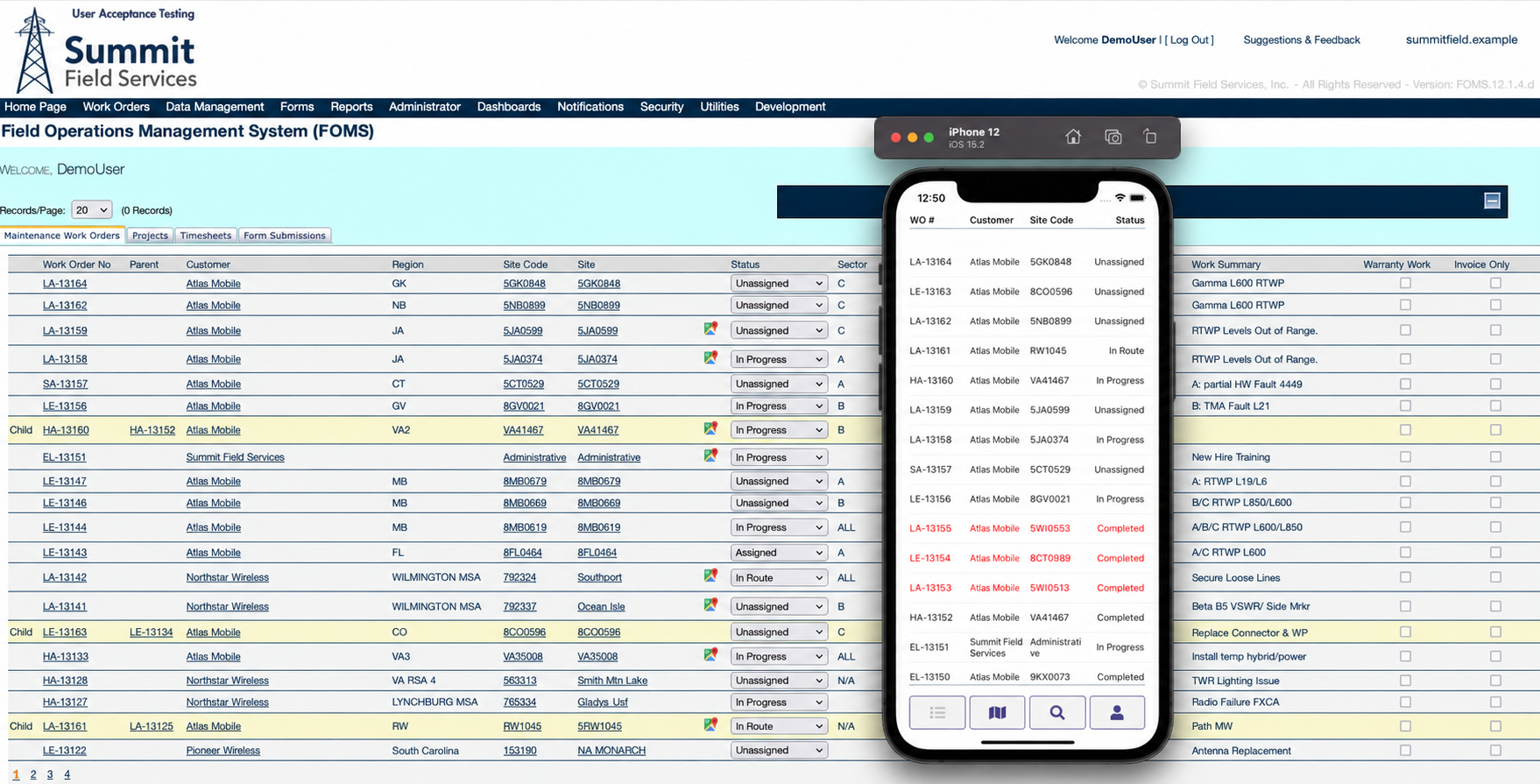
Existing software does not always need to be replaced. A targeted modernization can preserve proven business logic while adding mobile access and new capabilities that better fit how people work today.
“Tom Loya and Mark Roshon have been outstanding IT consultants to our company for the past 15 years! We operate our business using proprietary custom software and the Tornado team has assisted with a majority of the programming/development + enhancements and routine maintenance over the years. I highly recommend the entire Tornado team!”
Some clients need a rescue. Others simply need a dependable team to keep improving a system that already works.
Learn a system after the original developer is gone and establish a safe support path.
Add capabilities the business needs now without discarding years of useful logic.
Connect older software to accounting, ERP, APIs, reporting, or newer applications.
Update frameworks, databases, libraries, or environments while preserving business functionality.
Address immediate reliability or performance issues before deciding on larger investments.
Evaluate improvement versus replacement and identify the business rules and data that must survive any transition.
Yes. In fact, most of the software we work on was originally developed by someone else.
Many companies contact us because the original developer is no longer available, the software vendor has gone out of business, key employees have left the company, or the system has become difficult to maintain. In some cases, the people who originally built the software retired unexpectedly or are no longer able to support it.
We’ve successfully taken over and improved systems ranging from a few years old to software originally written in the 1990s. Many of these applications had little or no documentation, and in some cases no one fully understood how they worked when we first became involved.
Over the years, we’ve worked with more than 40 programming languages and over a dozen database platforms. While every system is different, most business applications share common building blocks such as data management, workflows, reporting, integrations, security, and user interfaces. Our experience across many technologies helps us quickly understand unfamiliar systems and identify opportunities for improvement.
Just as important, we spend time learning how your business operates and why the software exists in the first place. Understanding the business processes behind the application is often just as important as understanding the code itself.
Before making changes, we typically analyze the application, identify potential risks, and develop a plan for supporting and improving the system. In many cases, organizations are surprised by how much value can be gained from software they originally believed was too old or too difficult to maintain.
The goal is not simply to understand the code. The goal is to understand how the software supports your business so we can help it continue to provide value for years to come.
Industry experience can be helpful, but it is usually not the most important factor in successfully supporting and improving an existing application.
Many prospects ask us how much experience we have in their specific industry. Sometimes we have worked with very similar businesses. Other times we haven’t. What we’ve found is that business applications across many industries often solve similar problems.
For example, a manufacturing company may track production, inventory, scheduling, and quality. A distribution company may track orders, inventory, shipping, and customers. A healthcare organization may track compliance, workflows, reporting, and documentation. While the industries are different, many of the underlying software challenges are surprisingly similar.
Over the years, we’ve worked with organizations in manufacturing, healthcare, transportation, distribution, professional services, and many other industries. More importantly, we’ve worked with software that manages business processes, workflows, data, reporting, integrations, and operations across all of those environments.
We also believe that understanding your business is just as important as understanding your software. Before making recommendations, we spend time learning how your organization operates, what makes it unique, and why the software works the way it does. That knowledge helps us make better technical decisions and avoid changes that could negatively impact your operations.
In many cases, the most valuable combination is your team’s industry expertise paired with our software expertise. You understand the business. We understand how software can support and improve it. Together, we can often identify opportunities that neither group would discover on its own.
The goal is not to become experts in your industry overnight. The goal is to understand your business well enough to help your software continue supporting it effectively.
The honest answer is that it depends on the software, the business requirements, and the long-term goals of the organization.
Many companies assume that older software automatically needs to be replaced. In reality, we’ve seen plenty of systems that continue to provide significant value years or even decades after they were originally developed. We’ve also seen situations where replacement was clearly the right choice.
The first step is understanding whether the software’s problems are primarily technical or business-related.
For example, if the application still supports the business well but needs better reporting, updated technology, new integrations, improved performance, or user interface enhancements, improving the existing system may be the most cost-effective option.
On the other hand, if the software no longer meets the needs of the business, cannot support important workflows, or would require extensive modifications to remain viable, replacing it may make more sense. In some cases, an off-the-shelf package may be the right answer. In others, a custom solution may provide a better fit.
We’ve even worked with organizations that planned to replace an aging application entirely. One manufacturing company originally hired us to keep their system running until a replacement could be developed. After we helped stabilize the software, make improvements, and respond quickly to issues, they realized the existing application still met their needs. Several years later, they are still using and enhancing that system rather than replacing it.
At the same time, we have also advised clients when a replacement or commercial software package was the better long-term choice. Our goal is not to sell the largest project. Our goal is to help you determine which option provides the best value for your business.
The right answer is rarely based on the age of the software alone. It’s based on how well the software supports your business today and how well it can support your business in the future.
Not every older application needs to be replaced.
In fact, one of the biggest misconceptions in the software industry is that age alone determines whether software should be rewritten. We’ve seen applications that were decades old continue providing tremendous value to the organizations that depended on them.
When evaluating an existing application, we focus less on the age of the technology and more on questions such as:
Does the software still support the business effectively?
Can new features be added reasonably?
Are users generally satisfied with the workflow?
Can the system be maintained and supported?
Would a replacement provide meaningful business benefits?
Unfortunately, many organizations are told they need a complete rewrite before anyone has taken the time to thoroughly evaluate the existing system. Sometimes the reasons sound technical: the software is old, the code isn’t ideal, the technology is outdated, or modern tools could make development easier. While those concerns may be valid, they don’t automatically mean a rewrite is the best business decision.
The reality is that many software companies specialize in building new applications and may have limited interest in supporting older systems. That’s understandable. New projects are often easier to estimate, easier to market, and more enjoyable for developers. However, what is best for a software company is not always what is best for the client.
We’ve worked with organizations that were told their applications needed to be completely rewritten, only to discover that targeted improvements and ongoing support could address their biggest challenges at a fraction of the cost.
For example, one digital marketing agency came to us after being told by another provider that replacing their application would cost nearly $100,000. After evaluating the system, we were able to stabilize the application and address the immediate issues for a small fraction of that amount. Today, they can improve the software over time, adding new features when it makes business sense rather than committing to a large rewrite all at once.
That doesn’t mean rewrites are never justified. Sometimes a fresh start truly is the best solution. But we believe that recommendation should come after a thoughtful evaluation of the software, the business requirements, and the available alternatives—not simply because the application is old or unfamiliar.
The goal is to help you make the best business decision, whether that means improving what you have, replacing it, or pursuing a different solution altogether.
Most software improvement and modernization projects fall into one of three ranges:
Targeted Improvements: $2,000–$10,000
Major Enhancements: $10,000–$50,000
Strategic Application Investments: $50,000+
Targeted improvement projects often focus on a specific business problem such as adding a feature, creating new reports, improving performance, automating a manual task, or integrating with another system. Major enhancement projects typically involve multiple improvements, workflow changes, reporting upgrades, new functionality, or broader process automation initiatives. Strategic application investments often include a combination of new features, integrations, reporting enhancements, workflow improvements, automation, user experience upgrades, and technology updates that help the software continue evolving alongside the business.
One of the biggest advantages of improving an existing application is that you are building upon years of business knowledge that already exists within the software. The system already understands your workflows, terminology, processes, and operational requirements. Rather than starting over, many organizations can achieve significant improvements by enhancing the parts of the application that are creating the most frustration or limiting growth.
It is also important to recognize that software is rarely finished. As your business evolves, employees discover new ideas, processes change, opportunities for automation emerge, and new technologies become available. Improvements to your own software can be driven by the specific needs of your organization rather than the priorities of a software vendor serving thousands of customers.
We build regular checkpoints and status updates into every project so both sides stay aligned throughout the process. That makes it much easier to confirm that improvements are heading in the right direction before significant time and budget have been spent.
The best way to estimate cost is to begin with an assessment of the application and the business goals behind the project. Once we understand what is working, what is not, and what improvements are needed, we can recommend the most practical path forward and provide a realistic estimate.
The timeline depends on the condition of the software, the complexity of the business processes, and the scope of the improvements being made. Here are some typical ranges:
Targeted Improvements: A few days to a few weeks
Major Enhancements: A few weeks to two to three months
Strategic Application Initiatives: Often begin delivering value within a few months and may continue evolving over time
One advantage of improving an existing application is that organizations often begin seeing value much sooner than they would with a complete replacement project. Rather than spending months or years rebuilding functionality that already exists, improvement efforts can typically focus on the areas that provide the greatest business value first.
Many successful software improvement efforts are not a single project with a defined finish line. Instead, they are a series of targeted improvements delivered over time. Organizations often start with a specific problem or opportunity, then continue enhancing the application as new ideas, requirements, and business needs emerge.
The biggest factor affecting timeline is usually not the age of the software. It is how clearly the desired improvements are defined and how much of the existing system needs to be understood before changes can be made. In some cases we can begin making improvements almost immediately. In others, additional analysis is needed to fully understand the application and reduce risk before work begins.
Because we deliver improvements incrementally rather than all at once, your team can begin using and providing feedback on early changes while development continues. Organizations are often surprised to learn that meaningful improvements can be delivered in weeks rather than months.
You’re not alone. This is one of the most common reasons organizations contact us.
Over the years, we’ve worked with many companies whose original developer was no longer available. Sometimes the developer retired, changed careers, moved on to another company, or went out of business. In other cases, key employees left unexpectedly, and the knowledge of how the system worked left with them.
While this situation can feel risky, it doesn’t necessarily mean the software must be replaced.
Many business applications contain years or even decades of valuable business knowledge. Even when documentation is limited or nonexistent, the software itself, the database, the users, and the day-to-day business processes often provide enough information to understand how the system works and how it can be supported.
We’ve successfully taken over applications that were more than 20 years old, had little documentation, and were written by developers we never had the opportunity to meet. In many cases, we were able not only to support the software but also to improve it through new features, reporting, integrations, automation, and ongoing enhancements.
One of our first priorities is reducing risk. We work to understand the application, identify critical business processes, document what we learn, and ensure your organization is no longer dependent on a single individual for the continued operation of the software.
In fact, many companies find that taking the time to transfer knowledge, improve documentation, and establish a long-term support plan leaves them in a stronger position than they were when the original developer was still involved.
The goal is not simply to replace the knowledge that was lost. The goal is to help your organization regain confidence that the software can continue supporting the business well into the future.
We start by learning both the software and the business processes it supports.
Many of the systems we work with have little or no documentation. In some cases, the original developers are no longer available, key employees have left the company, or the software has been running successfully for years without anyone fully understanding how all of the pieces fit together.
Our first step is identifying the parts of the system that are most important to the business. We review the application, databases, reports, integrations, workflows, and source code while also spending time with the people who use the software every day.
Just as important, we focus on understanding why the software behaves the way it does. Business applications often contain years of accumulated knowledge, special rules, customer requirements, and operational processes that may not be obvious from the code alone. The people who use the software are often just as valuable a source of information as the software itself.
We’ve found that successful software support is rarely about understanding every line of code before making progress. It’s about understanding the parts of the system that matter most, reducing risk, documenting what we learn, and steadily building knowledge over time.
The goal is not simply to understand how the software was built. The goal is to understand how it helps your business operate so we can support it, improve it, and help it continue delivering value.
In our experience, older technology is usually not the biggest challenge.
We’ve worked with applications written in technologies ranging from modern development platforms to systems originally created in the 1990s and early 2000s.
In fact, some of the applications we currently support were originally developed decades ago and continue to provide significant value to the organizations that depend on them.
Over the years, we’ve worked with more than 40 programming languages and over a dozen database platforms. While technologies change, the underlying business challenges that software solves are often remarkably consistent. Orders still need to be processed, inventory still needs to be tracked, reports still need to be generated, and employees still need information to do their jobs.
The first question we typically ask is not, “How old is the technology?” Instead, we ask, “How well is the software supporting the business?”
Sometimes an older application can continue providing value for many years with only modest improvements and maintenance. Other times, technology limitations create challenges that justify modernization efforts. The right answer depends on factors such as business requirements, security needs, integration requirements, vendor support, performance, and long-term maintainability.
We’ve helped clients update applications to work with newer operating systems, databases, and third-party libraries while preserving the business functionality that employees depend on every day. In other situations, we’ve continued supporting older technologies because the software was stable, reliable, and meeting the organization’s needs.
Technology should support business goals, not drive them. Just because a programming language or database is older doesn’t automatically mean the software is obsolete.
The goal is to help you make informed decisions about where modernization creates value and where existing technology may still be serving the business effectively.
The possibilities are often much broader than most organizations realize.
Many people assume improving existing software means fixing bugs or updating outdated technology. While those are certainly common projects, most improvement efforts focus on making the software more useful, more efficient, and more aligned with the way the business operates today.
For example, improvements may include:
Adding new features or functionality
Creating new reports and dashboards
Automating manual processes
Integrating with other software systems
Improving user interfaces and usability
Reducing duplicate data entry
Supporting mobile devices or remote access
Enhancing security and access controls
Improving performance and reliability
Updating the application to work with newer operating systems, databases, or third-party components
Some of the most valuable improvements are surprisingly small. For example, we’ve helped organizations eliminate repetitive manual tasks by automating report distribution, integrating systems that required duplicate data entry, and streamlining workflows that employees performed every day.
Many improvements originate from the people who use the software. As employees become more familiar with a system, they often identify opportunities to save time, reduce errors, improve visibility, or make their jobs easier. Over time, those incremental improvements can have a significant impact on productivity and operational efficiency.
We’ve also found that successful business applications tend to evolve continuously. As markets change, customer expectations shift, and new technologies become available, software often needs to adapt as well. The goal is not simply to keep the application running. The goal is to help it continue supporting and improving the business.
Whether the improvement is a small enhancement or part of a long-term evolution strategy, our objective is the same: help your organization get more value from the software you already own.
Every software change carries some level of risk, whether the application was built last year or twenty years ago. The key is understanding and managing that risk before changes are made.
One common misconception is that older software is automatically dangerous to modify. In reality, we’ve seen older applications that were remarkably stable and well-suited for enhancement, while some newer systems presented significant challenges. The age of the software is usually less important than understanding how it works, how it supports the business, and what dependencies exist within the system.
Here is something worth considering before assuming that replacing the software is the safer choice: organizations often overestimate the risk of improving existing software while underestimating the risk of replacing it. A complete replacement project can require retraining users, migrating years of data, redefining workflows, and recreating business rules that may have evolved over decades. Sometimes that investment is justified. But the risk of replacement is real and should be weighed honestly against the risk of improvement.
Before making significant changes to an existing application, we typically spend time evaluating the software, understanding the affected business processes, identifying potential impacts, and determining the safest approach. In many cases, smaller incremental improvements can deliver substantial value while minimizing disruption.
One advantage of improving an existing application is that users can often continue working with familiar processes while enhancements are introduced gradually. This allows the organization to realize benefits sooner and reduces the disruption that often accompanies large-scale replacement projects.
The goal is not to eliminate risk entirely. The goal is to understand the risks on both sides of the decision, make informed choices, and choose an approach that provides the greatest business value with the least disruption to your organization.
In many cases, yes. In fact, a phased approach is often one of the biggest advantages of improving an existing application.
Many organizations assume they must choose between leaving the software exactly as it is or replacing it entirely. In reality, there is often a middle ground. Existing applications can frequently be improved one step at a time, allowing the business to address its highest-priority needs while spreading costs and risk over time.
For example, one phase might focus on improving reporting. A later phase could automate manual processes. Another phase might add integrations with other systems, enhance the user experience, or introduce new functionality requested by employees and customers.
This approach allows organizations to realize benefits sooner rather than waiting months or years for a complete replacement project to be finished. It also gives users an opportunity to provide feedback along the way, helping ensure that future improvements continue to align with business needs.
We’ve found that many successful business applications evolve over time through a series of targeted improvements rather than large, all-at-once projects. As employees use the software, they identify opportunities to save time, reduce errors, improve visibility, and streamline workflows. Those ideas can then be prioritized and implemented when they provide sufficient business value.
A phased approach also allows organizations to reassess priorities as conditions change. Rather than committing to a large project based on assumptions made months earlier, improvements can be guided by real-world feedback and current business needs.
The goal is not to create a perfect application all at once. The goal is to continuously improve a valuable business asset while delivering meaningful results throughout the process.
Most software modernization projects don’t fail because the technology is too old. They fail because the organization underestimates the business knowledge embedded within the existing system.
Over time, many applications accumulate years of specialized workflows, business rules, reporting requirements, customer expectations, and operational processes. Some of that knowledge exists in the software itself, but much of it exists only in the minds of employees who use the system every day. When that knowledge is overlooked, replacement projects can struggle to deliver the expected results.
Another common mistake is focusing too heavily on the technology while paying too little attention to the business problem. Organizations sometimes become convinced they need a new platform or a complete rewrite before clearly defining what improvements they are actually trying to achieve.
Large all-at-once initiatives often involve significant cost, long timelines, user retraining, data migration, and operational disruption. As complexity increases, so does risk. Starting with a focused improvement and expanding from there consistently produces better outcomes than trying to solve everything at once.
A lack of user involvement creates additional challenges. The people who use the software every day understand its strengths, weaknesses, and hidden requirements better than anyone else. That is why we make a point of keeping communication frequent and reviews regular throughout every project. When the people closest to the work are involved early and often, problems surface quickly and the end result is far more likely to reflect how the business actually operates.
Finally, some organizations begin modernization efforts without first evaluating whether modernization is actually necessary. We have worked with companies that believed they needed a complete replacement, only to discover that targeted improvements could solve most of their problems at a fraction of the cost.
The most successful modernization projects begin with a clear understanding of the business goals, an honest assessment of the existing software, and a willingness to evaluate all available options rather than defaulting to the most dramatic one.
Most business applications continue to evolve long after a project is finished.
As your business changes, you may need new features, additional integrations, updated reports, workflow improvements, automation opportunities, security enhancements, or technology updates. In many organizations, the software becomes more valuable over time because employees continue identifying ways to make it more efficient and better aligned with the business.
Some clients engage us regularly to help plan and implement ongoing improvements. Others contact us only when they need assistance with a specific issue, enhancement, or project. We recognize that every organization has different needs, so we work with clients to find a support approach that fits their situation.
We’ve found that many of the best improvement ideas come from the people who use the software every day. As employees gain experience with a system, they often discover opportunities to eliminate manual work, improve reporting, automate processes, reduce errors, or simplify workflows. Those ideas can often be implemented incrementally, allowing the software to continue delivering value year after year.
In some cases, our role is primarily maintaining and supporting an existing application. In others, we become a long-term partner helping the organization continuously improve a business-critical system. Both approaches can be successful depending on the goals of the business.
Most importantly, our goal is to help clients maintain flexibility. Some organizations work with us for many years. Others eventually transition support to internal staff or another provider. Because we believe software should remain an asset of the business, we don’t structure our relationships around creating dependency.
The goal is not simply to keep the software running. The goal is to help the software continue supporting, improving, and growing alongside your business.
That is exactly the point to talk. We can help you understand the current system, the business risks, and the options before you commit to a major rewrite.
Schedule A Call